Karnak Temples
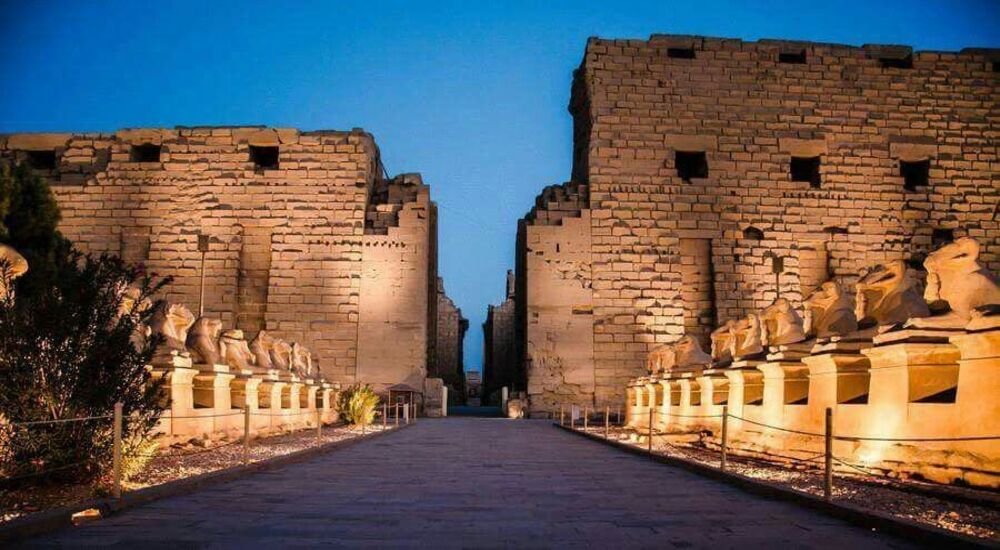
Sprawling across more than 200 acres along the East Bank of the Nile in Luxor, the Karnak Temples complex stands as the largest religious sanctuary ever constructed by human hands. Known anciently as Ipet-sut—”The Most Select of Places”—this monumental site served as the primary cult center for the Theban Triad of Amun-Ra, his divine consort Mut, and their son Khonsu.
For over 1,500 years, from the Middle Kingdom through the Ptolemaic and Roman eras, more than thirty successive pharaohs added their own pylons, shrines, and hypostyle halls to this sacred city. Exploring Karnak takes you through a breathtaking forest of soaring stone columns, colossal obelisks, and deeply carved reliefs celebrating the glory of ancient Egypt’s divine rulers.
Our complete Karnak Temples guide helps you navigate this vast, historic complex with ease. We cover essential history, architectural marvels, visiting hours, and smart travel tips. If you are planning an unforgettable trip to Upper Egypt, explore our tailored Egypt Day Tours
to visit Karnak with expert Egyptologists, or experience the magic of the Nile aboard our luxurious Nile Cruise Packages
.
Key Takeaways
- The Premier Sanctuary: Served as the central state temple and primary residence of Amun-Ra, King of the Gods.
- Massive Hypostyle Hall: Features 134 towering sandstone columns up to 21 meters high, making it one of humanity’s greatest architectural feats.
- 1,500 Years of Construction: Expanded by dozens of pharaohs including Hatshepsut, Thutmose III, Seti I, Ramesses II, and Taharqa.
- Connecting Ceremonial Way: Linked directly to Luxor Temple via the 2.7-kilometer Avenue of Sphinxes.
- Comprehensive Travel: Discover Karnak seamlessly as part of our customizableEgypt Tour Packages.
Why Karnak Temples Matter
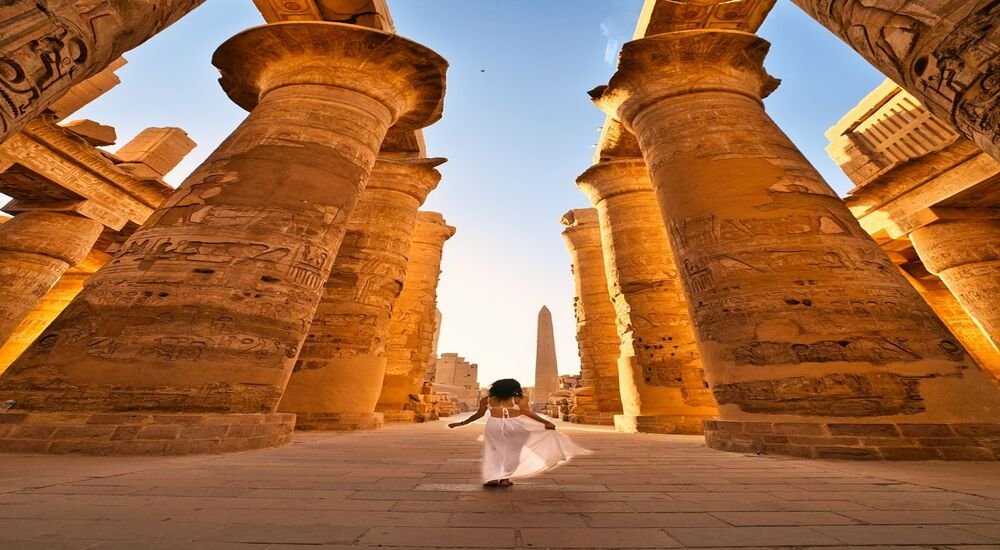
Why does Karnak hold such an unmatched place among the architectural wonders of the ancient world? Unlike single-phase structures, Karnak was a living, breathing religious city that grew over millennia alongside the power of the Egyptian Empire.
                  SACRED MAP OF ANCIENT THEBES (EAST BANK)
 _________________________________________________________________
|  KARNAK TEMPLES   ---> Primary Sanctuary of Amun-Ra            |
|        │                                                        |
|   Avenue of       ---> 2.7 km Ceremonial Processional Highway  |
|    Sphinxes                                                     |
|        │                                                        |
|  LUXOR TEMPLE     ---> Site of Opet Festival & Royal Re-coronation|
|_________________________________________________________________|
The Divine Realm of Amun-Ra
At the peak of the New Kingdom, Karnak was not merely a place of worship; it was a colossal economic and administrative powerhouse. The priests of Amun managed vast estates, farmlands, and gold mines granted by victorious pharaohs. Every major military campaign in the Levant or Nubia began with prayers at Karnak and concluded with rich plunder dedicated to Amun’s sacred treasury.
A Masterpiece Built by Generations
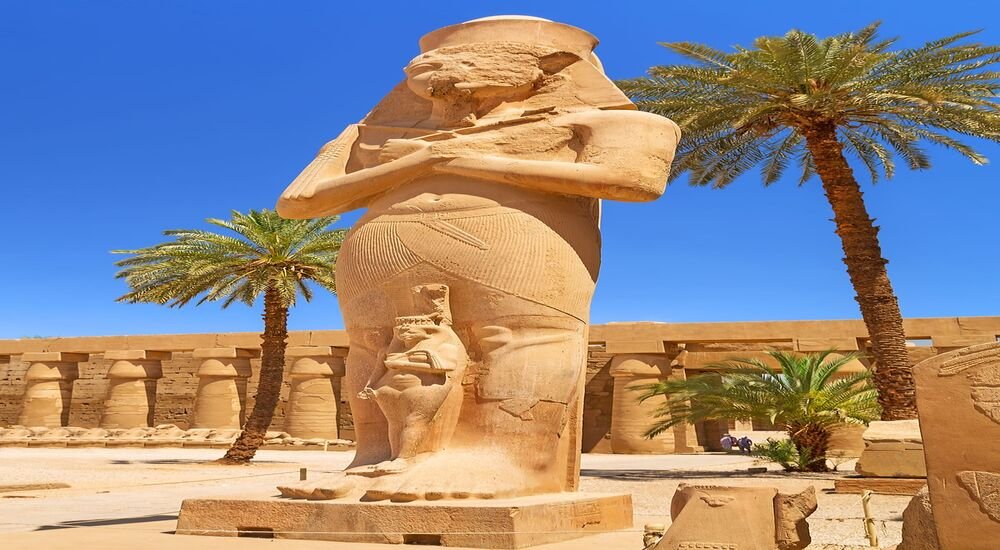
Virtually every famous Egyptian ruler sought to leave an indelible mark on Karnak:
- Hatshepsut: Erected two massive pink granite obelisks, including the tallest surviving ancient obelisk in Egypt.
- Thutmose III: Added the unique Festival Hall (Akh-menu) featuring botanical reliefs depicting foreign flora and fauna.
- Seti I & Ramesses II: Built and decorated the world-famous Great Hypostyle Hall.
- Taharqa (25th Dynasty): Erected the massive 19-meter-tall Kiosk in the First Court.
Temple Layout & Major Sections
The Karnak complex consists of three main precincts surrounded by mudbrick enclosure walls, though the Precinct of Amun-Ra is the primary area open to visitors.
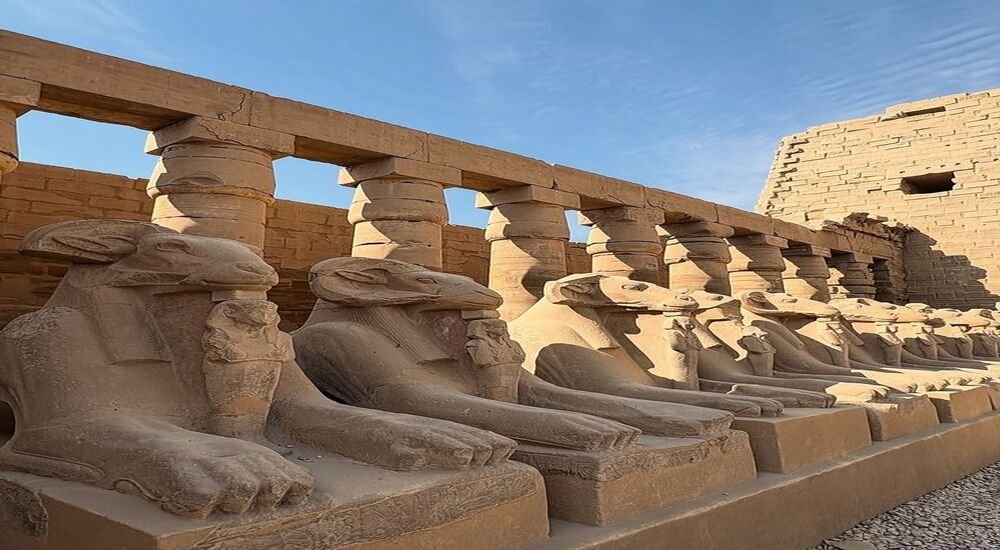
                    [ Ram-Headed Sphinx Entrance ]
                                  │
                          ┌───────┴───────┐
                          │  First Pylon  │ ◄── Unfinished 25th Dynasty Pylon
                          └───────┬───────┘
                                  │
                      ┌───────────┴───────────┐
                      │  Great Court & Kiosk  │ ◄── Kiosk of Taharqa
                      └───────────┬───────────┘
                                  │
                      ┌───────────┴───────────┐
                      │ Great Hypostyle Hall  │ ◄── 134 Massive Papyrus Columns
                      └───────────┬───────────┘
                                  │
                      ┌───────────┴───────────┐
                      │ Obelisks & Sanctuary  │ ◄── Obelisks of Hatshepsut & Thutmose I
                      └───────────┬───────────┘
                                  │
                      ┌───────────┴───────────┐
                      │   Sacred Lake &       │ ◄── Giant Granite Scarab Beetle
                      │ Festival Hall (Akh-menu)│
                      └───────────────────────┘
Architectural Highlights & Iconography
| Feature | Visual Description | Historical Significance |
| Great Hypostyle Hall | 134 sandstone columns arranged in 16 rows | Represents the primeval marshland at the moment of cosmic creation |
| Hatshepsut’s Obelisk | Single block of pink granite standing 29.5 meters high | Carved from Aswan granite to honor Amun-Ra and celebrate her jubilee |
| Sacred Lake | Large stone-lined reservoir measuring 120 x 77 meters | Used by ancient priests for ritual purification and sacred boat ceremonies |
| Granite Scarab Beetle | Carved statue dedicated by Amenhotep III near the lake | Symbolizes Khepri (the rising sun); traditionally circled 3 to 7 times for good fortune |
How to Visit Karnak Temples
Located roughly 2.5 kilometers north of downtown Luxor, visiting Karnak is smooth and easily arranged.
   RECOMMENDED LUXOR EAST BANK ITINERARY
   __________________________________________________________
  | 1. Visit Karnak Temples early morning (Coolest hours)  |
  | 2. Explore the Avenue of Sphinxes                     |
  | 3. Visit Luxor Museum & Mummification Museum            |
  | 4. Tour Luxor Temple at Sunset & Evening                |
  |_________________________________________________________|
Admission and Opening Hours
- Opening Hours: Daily from 6:00 AM to 5:30 PM.
- Best Time to Visit: Early morning (6:30 AM to 9:00 AM) to beat the desert heat and large tour crowds, or late afternoon for golden hour lighting on the sandstone columns.
- Guided Experience: Get the absolute most out of your visit with our expert-led Egypt Day Tours, where certified Egyptologists decode the complex hieroglyphs and history for you.
Getting There from Luxor Hotels & Cruises
- By Taxi / Private Driver: A short 10-minute drive from Luxor city center along the Nile corniche.
- By Horse Carriage (Caleche): Readily available from downtown hotels to the main visitor center.
- Organized Private Tour: Enjoy air-conditioned transfers as part of our all-inclusive Egypt Tour Packages.
Structural Comparison: Karnak vs. Luxor Temple
| Feature | Karnak Temples (Ipet-sut) | Luxor Temple (Ipet Resyt) |
| Primary Focus | Chief national sanctuary of Amun-Ra | Site of annual Opet Festival & royal re-coronation |
| Scale & Area | Sprawling 200-acre multi-temple complex | Single linear temple structure |
| Construction Span | 1,500+ years (Middle Kingdom to Ptolemaic) | Primarily New Kingdom (Amenhotep III & Ramesses II) |
| Lighting Best For | Morning & early afternoon exploration | Sunset into dramatic evening floodlighting |
Responsible Travel and Site Preservation
As one of the world’s most visited open-air archaeological sites, preserving Karnak requires cooperation from every traveler.
To learn more about international conservation and heritage efforts in ancient Thebes, explore official documentation at the UNESCO World Heritage Centre
.
- Protect Stone Surfaces: Avoid touching delicate hieroglyphic reliefs, as natural skin oils cause accelerated stone decay.
- Stay on Designated Paths: Do not climb on fallen column drums or masonry blocks.
- Respect Active Conservation Areas: Certain sections undergo periodic restoration to stabilize groundwater and preserve ancient paint.
Conclusion
The Karnak Temples stand as a towering testament to ancient Egyptian piety, artistic genius, and monumental engineering. From walking through the awe-inspiring forest of the Great Hypostyle Hall to admiring the soaring obelisks of Queen Hatshepsut, a trip to Karnak is an unforgettable journey to the heart of pharaonic power.
Ready to discover the secrets of ancient Thebes with top local expertise? Book your tour today with our team by choosing from our flexible Egypt Day Tours
, luxury Nile Cruise Packages
, or comprehensive Egypt Tour Packages
to experience Egypt’s legendary monuments in comfort and style.
FAQ
How long should I spend at Karnak Temples?
Because the complex is so vast, you should budget at least 2 to 3 hours to comfortably explore the main sights, including the Great Hypostyle Hall, Hatshepsut’s Obelisk, the Sacred Lake, and the outer courts.
Is Karnak Temple connected to Luxor Temple?
Yes! Both complexes are linked by the magnificent Avenue of Sphinxes (Rams Road), a 2.7-kilometer ancient ceremonial pathway lined with human-headed and ram-headed sphinxes.
Why are some columns in the Great Hypostyle Hall taller than others?
The central 12 columns stand 21 meters high with open papyrus capitals to allow natural light to filter in through high stone lattice windows (clerestory), while the side 122 columns are shorter with closed papyrus bud capitals.
Is Karnak Temple accessible for travelers with limited mobility?
The main central axis from the entrance through the First Pylon, Great Court, and Hypostyle Hall is flat and paved with dirt/stone pathways, making it relatively accessible, though some outer areas have loose gravel and uneven ancient steps.