Ramesseum Temple
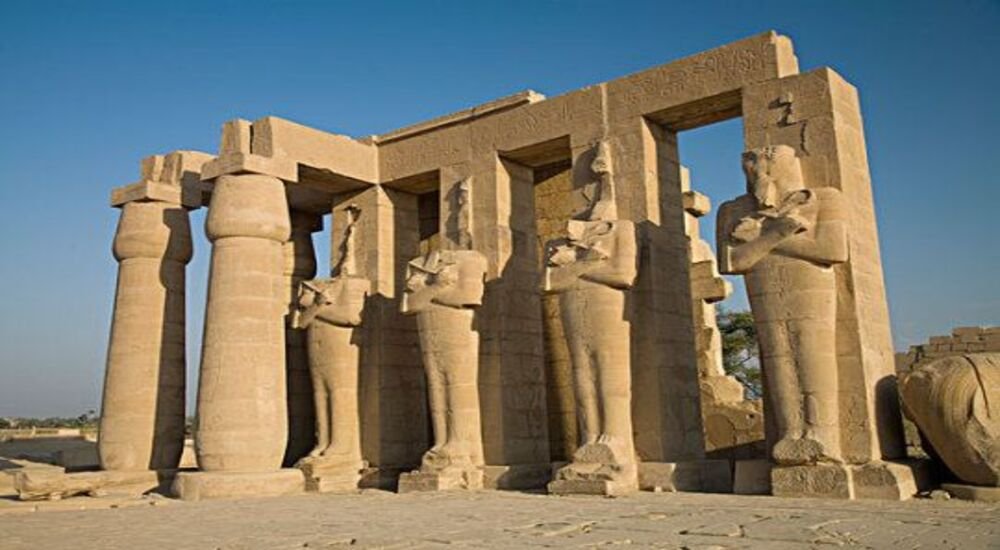
Standing majestically on the West Bank of the Nile in Luxor, the Ramesseum Temple is the grand mortuary complex of Pharaoh Ramesses II (“Ramesses the Great”). Constructed during his 67-year reign in the 13th century BC, this ancient sanctuary was designed as a colossal monument to both the pharaoh’s divine power and his immortal legacy, serving as a focal point for his royal funerary cult.
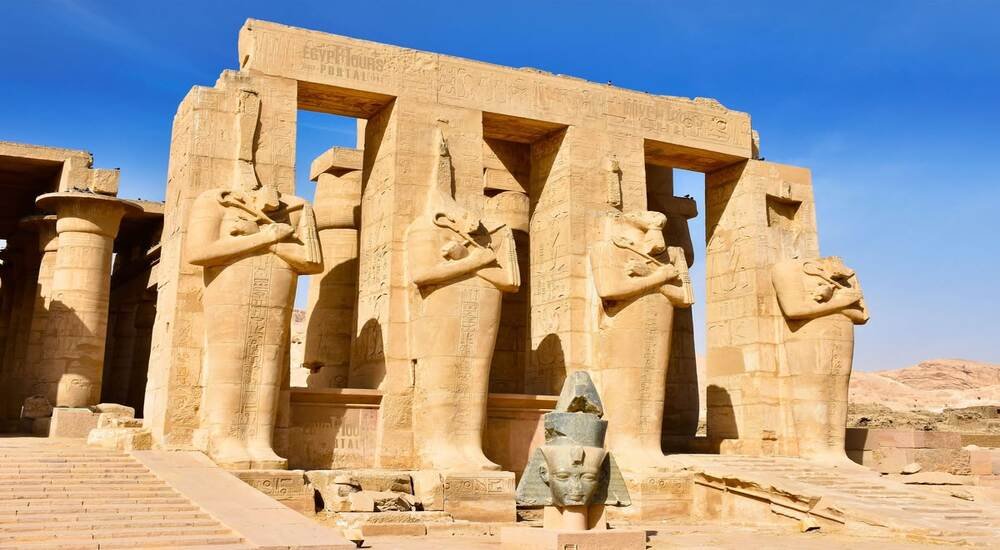
Known anciently as “The House of Millions of Years of Usermaatre Setepenre,” the complex is celebrated for its sweeping architecture, towering Osiris pillars, and the massive fallen colossus of Ramesses II—the very stone giant that inspired Percy Bysshe Shelley’s famous poem, Ozymandias.
Our complete Ramesseum Temple guide provides all the essential history, architectural highlights, visiting details, and travel advice you need for your trip across ancient Thebes. To experience the wonders of Luxor’s West Bank firsthand with professional guide service, discover our customized Egypt Day Tours
led by expert Egyptologists, or sail the Nile in elegance aboard our premier Nile Cruise Packages
Key Takeaways
- Royal Mortuary Temple: Built by Ramesses II to ensure his eternal cult and celebrate his reign on Earth.
- Poetic Inspiration: Houses the famous 1,000-ton fallen statue of Ramesses II that inspired Shelley’s masterpiece, Ozymandias.
- Mudbrick Granaries: Features vast, intact vaulted mudbrick storehouses that held economic riches and agricultural wealth for centuries.
- Historic Reliefs: Preserves detailed wall carvings depicting the famous Battle of Kadesh fought against the Hittite Empire.
- West Bank Exploration: Seamlessly add the Ramesseum to your itinerary with our flexibleEgypt Tour Packages.
Why the Ramesseum Temple Matters
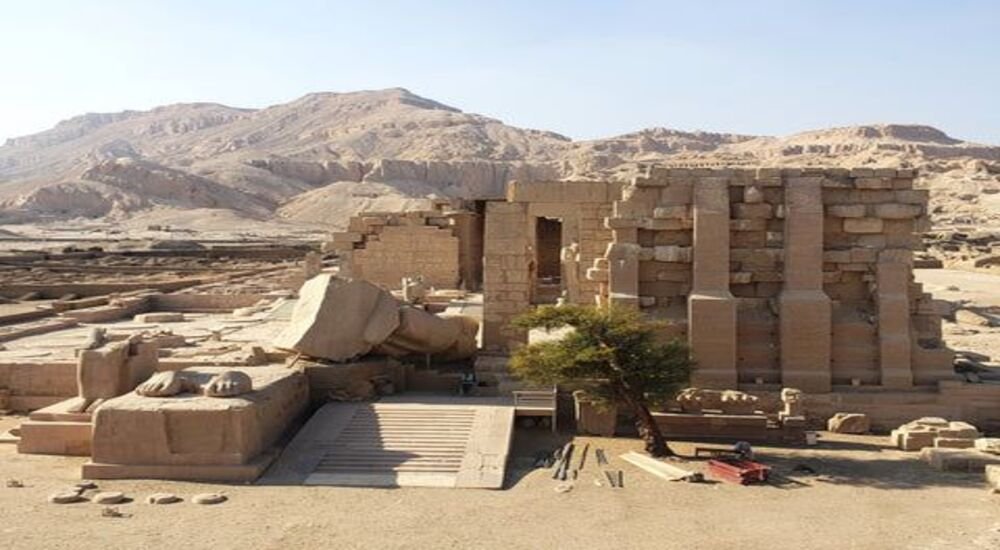
Why does the Ramesseum hold such a distinct place among the mortuary temples of ancient Egypt? While nearby sites like Medinet Habu or the Temple of Hatshepsut showcase restored facades, the Ramesseum offers an authentic, romantic glimpse into pharaonic grandiosity preserved amid ancient ruins.
                 SACRED WEST BANK NECROPOLIS (LUXOR)
 _________________________________________________________________
|  Valley of the Kings   ---> Royal Tombs & Hidden Burials       |
|  RAMESSEUM TEMPLE      ---> Funerary Cult & Treasury of        |
|                             Ramesses the Great                  |
|  Medinet Habu          ---> Mortuary Temple of Ramesses III    |
|_________________________________________________________________|
The Ultimate Monument to Ramesses the Great
Ramesses II spent decades expanding temples throughout Egypt, but the Ramesseum was created specifically to safeguard his personal memory and spirit (Ka). It served as an administrative heart and a sacred stage where priests performed daily rituals and offerings to honor the deified king long after his death.
The Legend of Ozymandias
In the 19th century, European travelers and poets became captivated by the temple’s magnificent ruins. When English poet Percy Bysshe Shelley learned of the immense fallen colossus lying in the second court, he penned his famous 1818 sonnet Ozymandias (derived from Ramesses’s throne name, Usermaatre):
“Look on my Works, ye Mighty, and despair!”
Nothing beside remains. Round the decay
Of that colossal Wreck, boundless and bare
The lone and level sands stretch far away.
Temple Layout & Architectural Plan
The temple follows a classic New Kingdom architectural axis, moving from massive outer pylons into open courtyards, a hypostyle hall, and inner shrines, surrounded by a expansive mudbrick administrative complex.
                  [ Entrance & First Pylon ]
                              │
                      ┌───────┴───────┐
                      │  First Court  │ ◄── Location of Fallen Ozymandias Colossus
                      └───────┬───────┘
                              │
                      ┌───────┴───────┐
                      │ Second Court  │ ◄── Osiride Statues & Portico
                      └───────┬───────┘
                              │
                      ┌───────┴───────┐
                      │ Hypostyle     │ ◄── 48 Soaring Columns with Papyrus Capitals
                      │     Hall      │
                      └───────┬───────┘
                              │
                      ┌───────┴───────┐
                      │ Inner Shrines │ ◄── Astronomical Ceiling & Sanctuary
                      └───────────────┘
Architectural Highlights & Iconography
| Feature | Visual Description | Historical Significance |
| Fallen Colossus (Ozymandias) | Shattered 17-meter granite statue weighing approximately 1,000 tons | One of the largest single stone sculptures ever transported and erected in history |
| Battle of Kadesh Reliefs | Pylon and courtyard wall carvings depicting chariots and infantry | Ramesses II’s epic propaganda depicting his war against the Hittite army |
| Mudbrick Granaries | Long vaulted mudbrick corridors surrounding the stone temple | Served as state grain stores, treasuries, and administrative centers |
| Astronomical Ceiling | Well-preserved ceiling relief in the hypostyle hall | Depicts constellations, decans, and ancient Egyptian celestial maps |
How to Visit the Ramesseum Temple
Situated on the West Bank between the Colossi of Memnon and the Valley of the Kings, visiting the Ramesseum is convenient and often less crowded than other major stops.
   RECOMMENDED WEST BANK HIGHLIGHTS ROUTE
   __________________________________________________________
  | 1. Valley of the Kings (Early Morning Exploration)      |
  | 2. Temple of Hatshepsut at Deir el-Bahari              |
  | 3. Ramesseum Temple (Quiet Mid-Day Exploration)        |
  | 4. Colossi of Memnon & Medinet Habu                     |
  |_________________________________________________________|
Admission and Opening Hours
- Opening Hours: Daily from 6:00 AM to 5:00 PM.
- Best Time to Visit: Mid-morning or early afternoon. Because the site receives fewer large bus groups than the Valley of the Kings, you can often enjoy exploring the ruins in relative quiet.
- Guided Experience: Enhance your understanding of the complex reliefs by joining our expert-guided Egypt Day Tours, where professional Egyptologists explain the historical background of every hall.
Getting There from Luxor City
- By Taxi / Private Vehicle: Cross the West Bank bridge or take the local Nile ferry, followed by a short 10-minute drive.
- Organized Private Excursion: Enjoy seamless, air-conditioned transport across all West Bank monuments through our all-inclusive Egypt Tour Packages.
Structural Comparison: Ramesseum vs. Medinet Habu
| Feature | Ramesseum Temple | Medinet Habu (Ramesses III) |
| Builder | Pharaoh Ramesses II (19th Dynasty) | Pharaoh Ramesses III (20th Dynasty) |
| State of Preservation | Romantic partial ruins with intact halls | Exceptionally well-preserved enclosed walls |
| Key Attraction | Fallen Colossus of Ozymandias & Granaries | Deeply carved reliefs & Sea Peoples battle walls |
| Visitor Density | Peaceful, low to moderate crowds | Moderate to high tourist traffic |
Responsible Travel and Site Preservation
The Ramesseum features a mixture of heavy granite, sandstone, and fragile mudbrick structures that require ongoing protection against erosion.
To read more about international architectural restoration efforts on Luxor’s West Bank, visit the official UNESCO World Heritage Centre
.
- Protect Mudbrick Architecture: Do not lean against or climb on ancient mudbrick granary walls.
- Respect Stone Reliefs: Avoid touching carved reliefs and Osiride statues to preserve surviving pigments.
- Stay on Pathways: Stick to marked stone walkways throughout the outer courts to protect buried masonry.
Conclusion
The Ramesseum Temple stands as a powerful testament to the grand ambition and monumental vision of Ramesses the Great. Whether you are marveling at the colossal fallen statue of Ozymandias, admiring the soaring hypostyle columns, or wandering through the vaulted ancient granaries, this West Bank sanctuary promises an inspiring encounter with history.
Ready to explore Luxor’s legendary monuments with local expertise? Plan your ideal trip today with our team by choosing from our customizable Egypt Day Tours
, relaxing Nile Cruise Packages
, or comprehensive Egypt Tour Packages
to experience ancient Egypt in total comfort.
Frequently Asked Questions
Why is the Ramesseum Temple mostly in ruins?
Unlike temples built entirely of solid stone on higher ground, parts of the Ramesseum were built near the Nile floodplain. Over centuries, annual Nile floods weakened its foundations. Later pharaohs also reused stone from its outer structures for their own projects.
How heavy was the fallen Ozymandias colossus?
The colossal seated statue of Ramesses II was carved from a single block of pink Aswan granite and weighed approximately 1,000 tons (over 2 million pounds).
How long does a visit to the Ramesseum take?
A thorough walk through the courtyards, hypostyle hall, and surrounding mudbrick granaries typically takes 45 to 60 minutes.
Can you visit the Ramesseum together with the Valley of the Kings?
Yes! Both monuments are located on Luxor’s West Bank, just a 10-minute drive from each other, making them simple to combine in a single morning or day excursion.