Luxor Temple
Stepping along the bustling East Bank of Luxor, the magnificent towers and columns of Luxor Temple instantly command your attention. Rising dramatically alongside the Nile River, this ancient sanctuary has stood at the core of Egyptian spiritual life for over 3,400 years. It serves as one of the most remarkably continuous places of worship anywhere on Earth.
Constructed primarily during the New Kingdom era by Pharaoh Amenhotep III and grandly expanded by Ramesses II, this sandstone masterpiece represents a pinnacle of pharaonic architecture. Exploring its grand colonnades and atmospheric courtyards offers a captivating journey through ancient coronation rituals, imperial conquests, and millennia of sacred tradition.
Our complete Luxor Temple guide helps you navigate this iconic East Bank landmark effortlessly. We cover essential history, architectural highlights, nighttime visiting tips, and nearby attractions. If you are eager to experience these grand monuments in person, discover our private Egypt Day Tours
to explore Luxor with expert Egyptologists, or sail between Upper Egypt’s ancient capitals aboard our luxurious Nile Cruise Packages
.
Key Takeaways
- The Sacred Purpose: Unlike standard temples dedicated to daily cult gods, Luxor Temple was built for the Opet Festival to renew the divine authority (Ka) of the living Pharaoh.
- Multilayered History: Carved and added to over 3,400 years by Amenhotep III, Tutankhamun, Ramesses II, Alexander the Great, the Roman Empire, Copts, and Islamic scholars.
- Unique Living Heritage: Houses the active 13th-century Mosque of Abu Haggag built directly atop the ancient sandstone court.
- Ancient Highway: Connected directly to Karnak Temple via the magnificent 2.7-kilometer Avenue of Sphinxes.
- Best Experience: Visit during late afternoon to witness the setting sun and spectacular evening floodlighting with our customEgypt Tour Packages.
Why Luxor Temple Matters
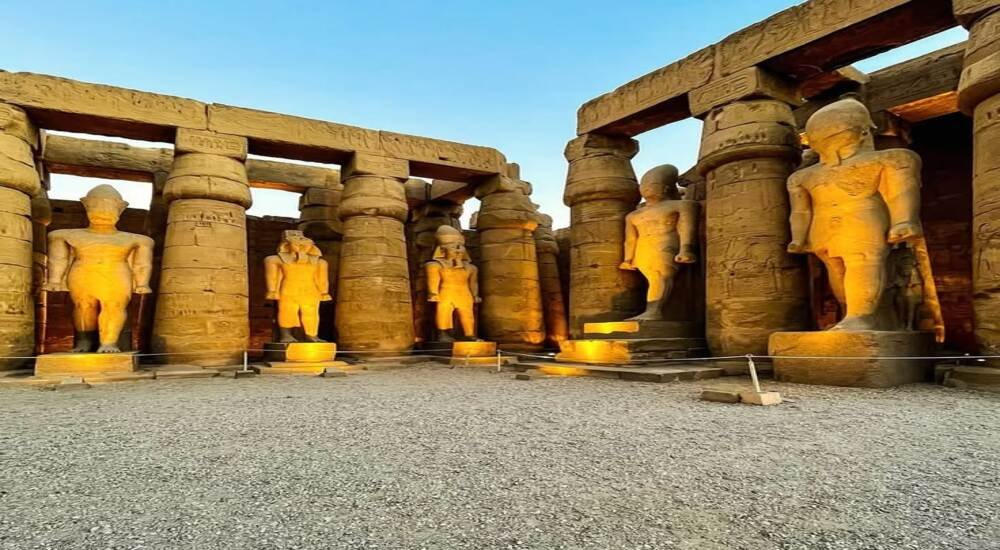
Why does Luxor Temple hold such a singular place among the vast monuments of ancient Egypt? Known in antiquity as Ipet Resyt (“The Southern Sanctuary”), it served a unique spiritual and political function that set it apart from typical funerary or cult temples.
                   Ancient Mortuary vs. State Temples
 _________________________________________________________________
|  Karnak Temple  ---> Main State Cult Center for Amun-Ra         |
|  LUXOR TEMPLE   ---> Site of Opet Festival & Royal Re-coronation |
|  West Bank Tombs -> Funerary Cults & Royal Burials              |
|_________________________________________________________________|
The Sacred Stage for the Opet Festival
While Karnak Temple served as the primary residence of the god Amun-Ra, Luxor Temple was designed as the sacred setting for the annual Opet Festival. During this major religious celebration, statues of Amun-Ra, his consort Mut, and their son Khonsu were carried in grand procession from Karnak south to Luxor Temple—both on foot along the ceremonial avenue and by sacred river barges on the Nile.
Inside the temple’s inner sanctuary, secret ceremonies were performed to merge the physical pharaoh with the divine royal spirit (Ka). This sacred ritual spiritually reborn and re-crowned the pharaoh, confirming their divine right to rule Egypt for another year.
A 3,400-Year Palimpsest of Faith
What makes Luxor Temple truly extraordinary is its unbroken record of human worship. Rather than being abandoned when the pharaonic era ended, successive civilizations adapted the sacred space:
- Pharaonic & Hellenistic Era: Amenhotep III built the original core, Ramesses II doubled its size, and Alexander the Great later carved a dedicated chapel inside the shrine.
- Roman Imperial Period: The Romans converted part of the inner halls into a military fortress (castrum) and a imperial cult chamber decorated with Roman frescoes.
- Coptic Era: Early Christians converted the hypostyle halls into churches, leaving carved crosses alongside pharaonic hieroglyphs.
- Islamic Era: In the 13th century, local residents constructed the Mosque of Abu Haggag high atop the accumulated silt inside the Court of Ramesses II.
What Makes Luxor Temple Unique on the East Bank
Unlike most ancient temples that face east toward the sunrise or west toward the setting sun, Luxor Temple is oriented north-south. This intentional alignment points directly toward Karnak Temple, reinforcing the sacred geographic link between the two great religious complexes.
Temple Layout & Architectural Plan
Navigating the site takes you through a chronological journey backward in time—starting with the newer outer court of Ramesses II and walking back toward the older inner sanctuary of Amenhotep III.
                   [ Avenue of Sphinxes (To Karnak) ]
                                   │
                           ┌───────┴───────┐
                           │   Pylon of    │ ◄── Paris Obelisk Twin / Colossal Statues
                           │  Ramesses II  │
                           └───────┬───────┘
                                   │
                       ┌───────────┴───────────┐
                       │  Court of Ramesses II │ ◄── Mosque of Abu Haggag
                       └───────────┬───────────┘
                                   │
                       ┌───────────┴───────────┐
                       │  Great Colonnade of   │ ◄── 14 Papyrus Columns (19m high)
                       │     Amenhotep III     │
                       └───────────┬───────────┘
                                   │
                       ┌───────────┴───────────┐
                       │ Sun Court & Hypostyle │
                       └───────────┬───────────┘
                                   │
                       ┌───────────┴───────────┐
                       │  Sanctuary of Amun    │ ◄── Chapel of Alexander the Great
                       └───────────────────────┘
The First Pylon & Gateway of Ramesses II
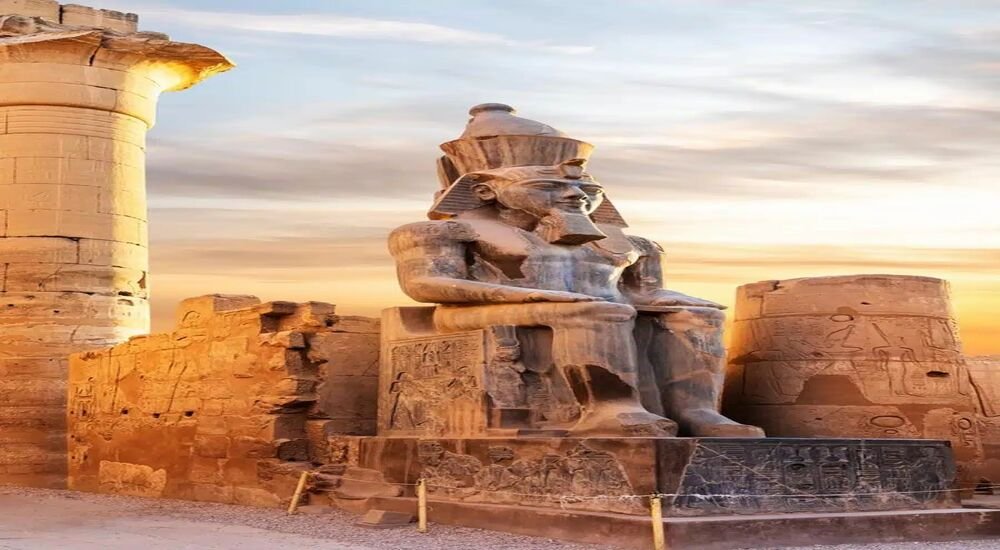
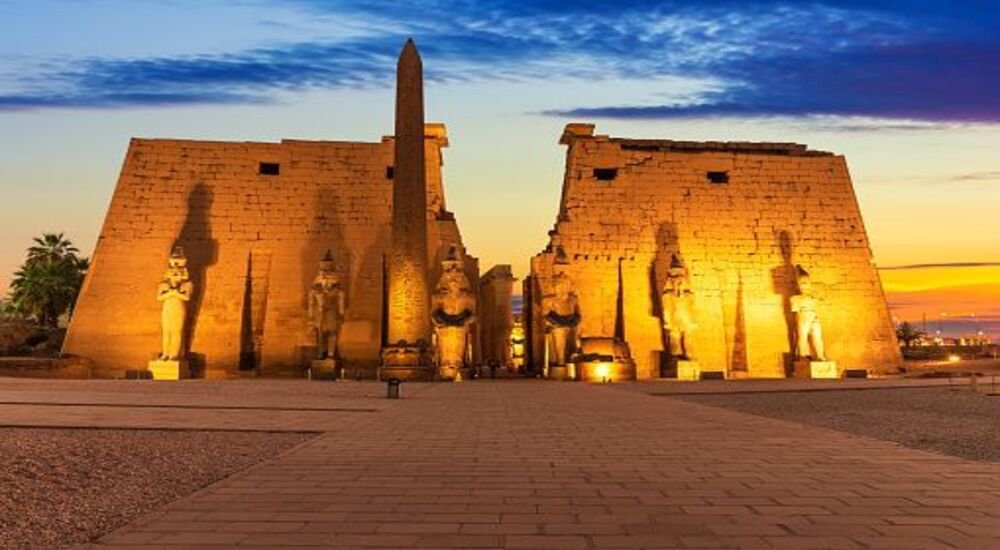
The grand entrance is formed by a massive 24-meter-tall pylon built by Ramesses II. The outer walls feature detailed relief carvings depicting the king’s military exploits at the famous Battle of Kadesh. Flanking the entrance gateway stand colossal seated statues of Ramesses II and a imposing 25-meter red granite obelisk.
The Paris Connection: Originally, two matching red granite obelisks guarded the temple entrance. In 1831, the western obelisk was presented to France as a gift by Viceroy Muhammad Ali Pasha. Today, it stands prominently in the center of the Place de la Concorde in Paris.
The Great Colonnade of Amenhotep III
Passing through the first court, visitors enter a breathtaking processional avenue flanked by 14 massive open-papyrus columns standing 19 meters (62 feet) high. The sidewalls feature extensive relief carvings—initiated under Tutankhamun and finished by Horemheb—vividly illustrating the music, dancing, and grand boat processions of the Opet Festival.
Key Highlights & Relief Iconography
Despite centuries of sand accumulation and weathering, careful observation reveals extraordinary artistic detail across the temple walls:
| Feature | Visual Description | Historical Significance |
| Avenue of Sphinxes | 2.7 km path lined with over 1,000 human-headed sphinxes | Ancient ceremonial highway connecting Luxor Temple to Karnak |
| Mosque of Abu Haggag | Elevated 13th-century mosque built into the temple wall | Demonstrates over 3,000 years of continuous religious worship |
| Alexander’s Chapel | Inner granite shrine featuring Greek and Pharaonic reliefs | Shows Alexander the Great presenting offerings to Amun-Ra |
| Battle of Kadesh Reliefs | Detailed battle scenes carved across the front pylon | Ramesses II’s propaganda celebrating his military campaigns |
How to Visit Luxor Temple
Located directly in downtown Luxor along the East Bank corniche, visiting Luxor Temple is seamless and easily incorporated into any trip.
   TYPICAL EAST BANK DAY TOUR ROUTE
   __________________________________________________________
  | 1. Start at Karnak Temple (Morning Exploration)         |
  | 2. Walk or Drive along the Avenue of Sphinxes          |
  | 3. Visit Luxor Museum & Mummification Museum            |
  | 4. Tour Luxor Temple at Sunset & Nightfall               |
  |_________________________________________________________|
Admission and Opening Hours
- Opening Hours: Daily from 6:00 AM to 10:00 PM.
- Best Time to Visit: Late afternoon (around 4:30 PM to 5:00 PM). This allows you to explore the reliefs in natural daylight, watch the golden sunset over the Nile, and witness the dramatic floodlights illuminate the colossal columns after dark.
- Guided Tours: Enhance your experience by booking with our team on our private Egypt Day Tours, where expert guides reveal the hidden stories behind every carving.
Getting There from Luxor Hotels & Cruises
- On Foot: The temple is situated in the heart of downtown Luxor, within easy walking distance from most East Bank hotels and Nile cruise docks.
- By Taxi / Horse-Carriage (Caleche): Readily available anywhere along the Nile corniche.
- Organized Private Tour: Enjoy door-to-door air-conditioned transfers as part of our all-inclusive Egypt Tour Packages.
Structural & Historical Comparison
Understanding how Luxor Temple compares to its neighboring sister complex at Karnak helps highlight its specific role in Upper Egypt:
| Feature | Luxor Temple (Ipet Resyt) | Karnak Temple (Ipet Sut) |
| Primary Focus | Royal coronation & spirit renewal (Opet) | Main state cult sanctuary for Amun-Ra |
| Main Builders | Amenhotep III & Ramesses II | Over 30 successive Pharaohs across 1,500+ years |
| Connection | Linked via 2.7 km Avenue of Sphinxes | Linked via 2.7 km Avenue of Sphinxes |
| Best Viewing | Sunset to Evening (dramatically lit) | Morning to Mid-day light |
Responsible Travel and Site Preservation
Luxor Temple stands as a delicate historical treasure surrounded by modern urban development and rising groundwater levels.
To learn more about international conservation efforts and heritage management across Thebes, consult official documentation at the UNESCO World Heritage Centre
.
- Respect Sacred Boundaries: Do not climb on fragile column bases or sandstone pedestals.
- No Flash Photography: Turn off your flash inside shaded inner chambers to prevent light damage to surviving wall pigments.
- Keep Pathways Clear: Be mindful of local worshippers accessing the Mosque of Abu Haggag during daily prayer hours.
Conclusion
Luxor Temple remains a luminous beacon of pharaonic power, artistic mastery, and sacred endurance. From its origins as the grand stage for royal rebirth during the Opet Festival to its night illuminated beneath the stars, this East Bank sanctuary offers an unforgettable highlight for every traveler.
Ready to explore the wonders of ancient Thebes with dedicated local expertise? Book your journey today with our team by choosing from our flexible Egypt Day Tours
, relaxing Nile Cruise Packages
, or comprehensive Egypt Tour Packages
to experience the magic of Upper Egypt firsthand.
FAQ
Why is there a mosque inside Luxor Temple?
The Mosque of Abu Haggag was built in the 13th century when the temple structure was largely buried under centuries of accumulated debris and sand. The mosque’s entrance was built at what was then ground level. When archaeologists excavated the pharaonic temple in the late 19th century, the historic mosque was preserved as an essential chapter of the site’s history.
Is Luxor Temple connected to Karnak Temple?
Yes! Both complexes are connected by the newly restored Avenue of Sphinxes (Rams Road), a 2.7-kilometer ancient ceremonial pathway lined with over 1,000 human-headed and ram-headed sphinx statues.
What happened to the second obelisk at Luxor Temple?
The western twin obelisk was gifted to France in 1831 by Egypt’s ruler Muhammad Ali Pasha in exchange for a mechanical clock (which currently sits in the Citadel of Cairo). Today, the obelisk stands at the Place de la Concorde in Paris.
Can you visit Luxor Temple at night?
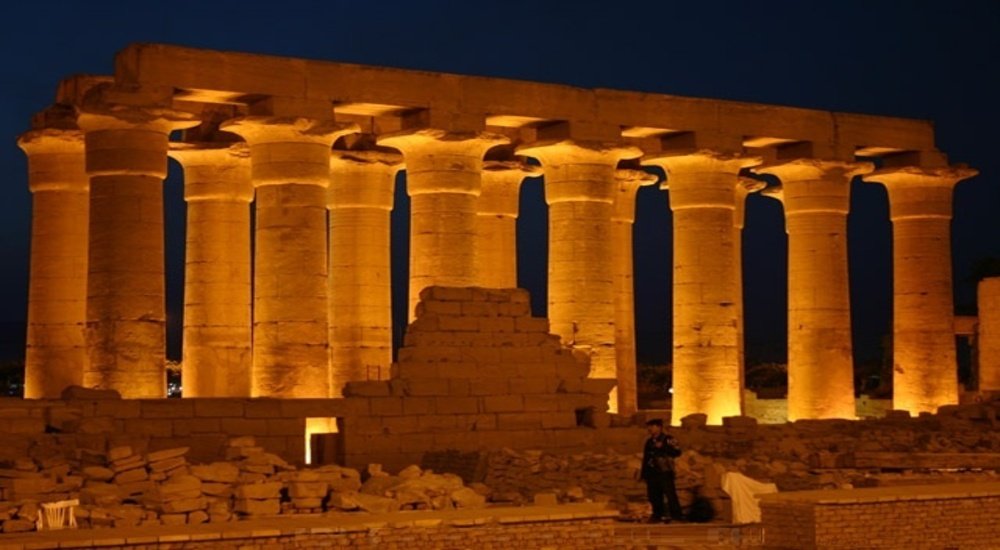
Yes! Luxor Temple is one of the few ancient Egyptian monuments open until 10:00 PM. Visiting at night is highly recommended as warm floodlights illuminate the massive columns, statues, and reliefs against the dark night sky.
How long does a typical visit take?
A thorough exploration of the courts, colonnades, and inner shrines usually takes between 60 to 90 minutes.