Colossi of Memnon : Guide to Luxor’s Ancient Guardians
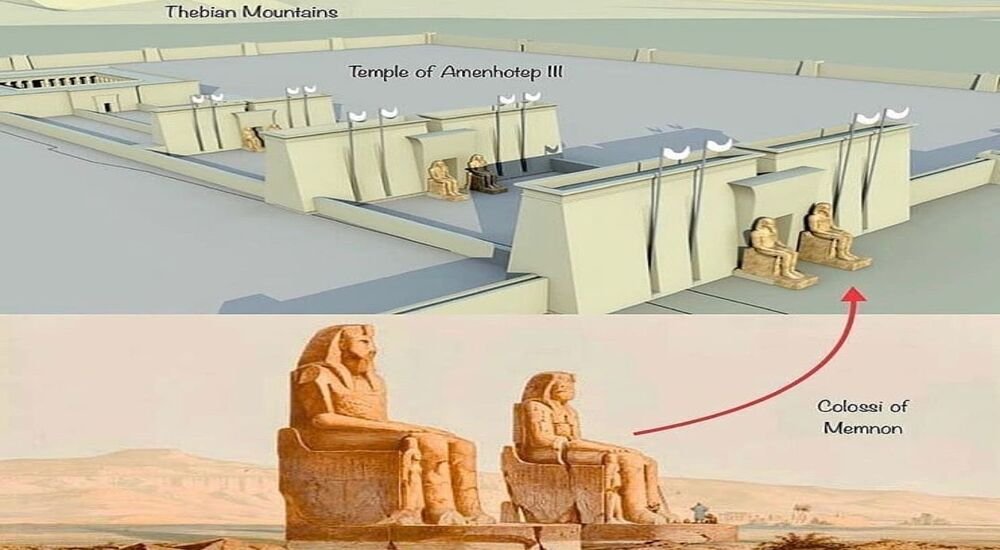
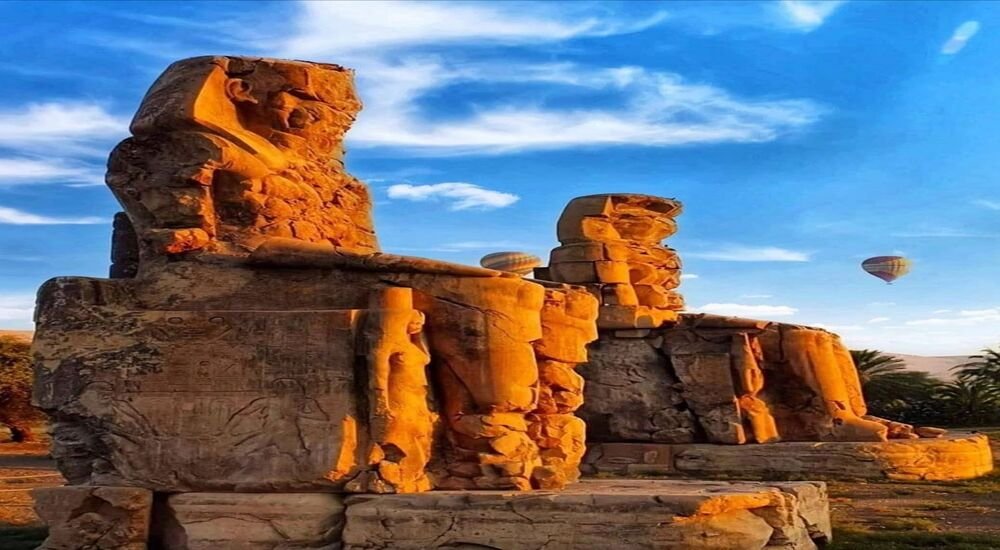
Stepping onto the West Bank of Luxor, the colossal twin stone statues of Amenhotep III instantly capture your imagination. Standing majestically against the backdrop of the desert hills, these ancient monuments have greeted travelers for over three thousand years. They serve as the enduring guardians of what was once the grandest mortuary temple complex in ancient Egypt.
Carved from single blocks of quartzite sandstone, the Colossi of Memnon offer a fascinating bridge between ancient pharaonic glory and classical Greco-Roman legends. Exploring this historic site gives you a profound glimpse into royal monumentality, ancient engineering, and centuries of travel tradition.
Our complete Colossi of Memnon guide helps you appreciate this iconic landmark effortlessly. We cover essential history, the origin of the mysterious “vocal” phenomenon, visiting details, and nearby attractions. If you are planning to experience these monumental statues in person, explore our tailored Egypt Day Tours
to discover the full grandeur of ancient Thebes with expert local guides, or sail the river in style with our luxurious Nile Cruise Packages
.
Key Takeaways
- Discover the historical origin of these 18-meter-tall monolithic quartzite statues built for Pharaoh Amenhotep III.
- Learn how an earthquake created the famous “singing statue” myth that drew Greek and Roman tourists in antiquityHere is the updated Colossi of Memnon article incorporating your exact internal tour links, authoritative external resources, and the complete, sleek layout established in our design template:
Colossi of Memnon: Guide to Luxor’s Ancient Guardians
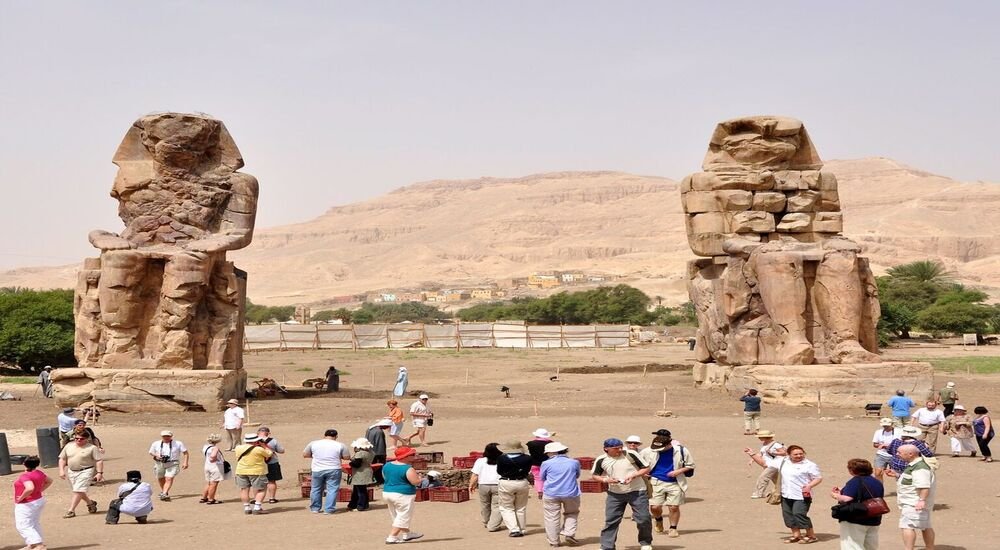
Stepping onto the West Bank of Luxor, the colossal twin stone statues of Amenhotep III instantly capture your imagination. Standing majestically against the backdrop of the desert hills, these ancient monuments have greeted travelers for over three thousand years. They serve as the enduring guardians of what was once the grandest mortuary temple complex in ancient Egypt.
Carved from single blocks of quartzite sandstone, the Colossi of Memnon offer a fascinating bridge between ancient pharaonic glory and classical Greco-Roman legends. Exploring this historic site gives you a profound glimpse into royal monumentality, ancient engineering, and centuries of travel tradition.
Our complete Colossi of Memnon guide helps you appreciate this iconic landmark effortlessly. We cover essential history, the origin of the mysterious “vocal” phenomenon, visiting details, and nearby attractions. If you are planning to experience these monumental statues in person, explore our tailored Egypt Day Tours
to discover the full grandeur of ancient Thebes with expert local guides, or sail the Nile in luxury with our classic Nile Cruise Packages
.
Key Takeaways
- Discover the historical origin of these 18-meter-tall monolithic quartzite statues built for Pharaoh Amenhotep III.
- Learn how an earthquake created the famous “singing statue” myth that drew Greek and Roman tourists in antiquity.
- Plan your visit as a seamless, free-admission stop on Luxor’s West Bank itinerary.
- Understand the massive ongoing archaeological efforts at the surrounding Mortuary Temple of Amenhotep III.
- Pair your visit with nearby landmarks using customizedEgypt Tour Packages.
Why the Colossi of Memnon Matter
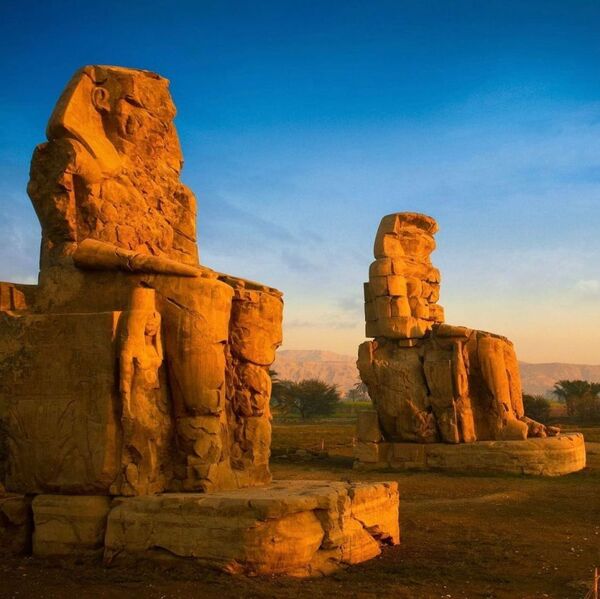
Why do these isolated giants standing in the middle of agricultural fields hold such a prominent place in history? Built around 1350 BCE during the 18th Dynasty, the two massive figures depict Pharaoh Amenhotep III seated on his throne. They were designed not only to glorify the divine king, but to stand as sentinel gatekeepers at the entrance of his vast funerary complex.
From Pharaonic Grandeur to Sacred Guardianshi
The statues were originally placed at the gateway of Amenhotep III’s mortuary temple—the largest religious complex ever constructed on the West Bank of Thebes. Spanning an area even larger than the Karnak Temple, this sacred ground was built to honor the pharaoh as a living god on Earth. The twin colossi stood tall to protect the sacred realm within from harm and secular intrusion.
Unfortunately, nature took a heavy toll on the temple behind them. Built close to the Nile floodplain, annual inundations slowly eroded the mudbrick enclosures, while a devastating earthquake around 27 BCE leveled much of the remaining stone structures. Today, while the temple body has largely disappeared, the two stone monoliths remain standing strong as testament to the scale of pharaonic ambition.
The Myth of the “Vocal Memnon”
Following a massive earthquake in 27 BCE, the northern statue suffered severe structural damage, causing its upper body to crack and collapse. Shortly thereafter, travelers began reporting a remarkable phenomenon: every morning at sunrise, the statue produced a strange musical tone or ringing sound.
- Greek & Roman Interpretations: Classical visitors identified the statue not as Amenhotep III, but as Memnon, the hero of the Trojan War and son of Eos (the Goddess of Dawn). They believed the morning “song” was Memnon greeting his mother each daybreak.
- The Physical Cause: Modern scientists believe the sound was caused by heat expansion and evaporation of morning dew trapped within the porous sandstone cracks.
- The End of the Song: Around 199 CE, Roman Emperor Septimius Severus attempted to restore the statue by repairing the upper tiers with limestone blocks. The repair sealed the fissures, permanently silencing the legendary voice of Memnon.
What Makes the Statues Unique on Luxor’s West Bank
Unlike the subterranean tombs hidden deep within the desert valleys, the Colossi of Memnon are colossal open-air monuments designed for maximum public visibility. They represent a prime example of quartzite quarrying and transport from northern Egypt (near modern Cairo) over 400 miles south to Thebes—an astounding feat of logistics and engineering for the ancient world.
Location, Setting, and Archaeological Surroundings
Nestled along the main road leading from the Nile ferries to the Theban Necropolis, the Colossi of Memnon sit at the crossroad of fertile farmland and desert cliffs.
Where the Statues Sit on the West Bank
The colossi are located roughly 1.5 kilometers inland from the Nile River on the West Bank of Luxor. Positioned at the boundary between the green cultivated fields and the dry desert plateau, they are typically the very first major monument travelers encounter after crossing the river from the East Bank.
The Mortuary Temple of Amenhotep III Project
Behind the twin guardians lies an active archaeological treasure trove. The Memnon/Amenhotep III Temple Conservation Project has conducted extensive excavations over recent decades, revealing that the site was far more vast than previously thought. Archaeologists have uncovered dozens of additional statues, including massive figures of Goddess Sekhmet and twin royal colossi at the temple’s second and third pylons.
To learn more about ongoing archaeological heritage and conservation efforts across Luxor, you can consult official resources from the UNESCO World Heritage Centre
.
Climate and Terrain Considerations
Located in an open field, the site receives full sun exposure throughout the day. The ground around the immediate perimeter of the statues is flat and paved with dirt and stone pathways, making it comfortable to walk around and photograph from multiple angles.
Artistic Features, Reliefs, and Dimensions
Carved out of single blocks of quartzite sandstone quarried at Gebel el-Ahmar (near modern Cairo), each statue weighs an estimated 720 tons and reaches approximately 18 meters (60 feet) in height including their bases.
Detailed Iconography on the Statues
Despite centuries of weathering and erosion, careful observation reveals detailed artistic symbolism across the throne surfaces:
| Feature | Visual Description | Symbolic Meaning |
| Nile Gods (Hapi) | Two figures tying together papyrus and lotus plants | The Sema-Tawy symbol representing the unification of Upper and Lower Egypt |
| Queen Tiye | Small figure standing beside the pharaoh’s right leg | Represents the powerful Chief Royal Wife of Amenhotep III |
| Queen Mutemwiya | Small figure standing beside the pharaoh’s left leg | Represents the mother of Amenhotep III |
| Royal Inscriptions | Hieroglyphic cartouches down the throne back | Titles and honorific names of Amenhotep III |
Ancient Graffiti and Historical Inscriptions
The northern statue features over 100 historical inscriptions carved into its stone legs and base by Greek and Roman travelers between the 1st and 3rd centuries CE. Emperors, governors, poets, and soldiers left behind Latin and Greek epigrams confirming that they had personally heard the “voice of Memnon.” These historical inscriptions remain some of the earliest recorded examples of tourist graffiti in human history.
How to Visit the Colossi of Memnon
Planning a visit to the Colossi of Memnon is straightforward, as it serves as a natural starting point for any West Bank sightseeing itinerary.
Admission and Opening Hours
- Ticket Fees: Access to view and walk around the Colossi of Memnon is currently FREE. There is no official ticket requirement for the main statues.
- Opening Hours: The site is open 24/7 as an open-air monument, though visiting during daylight hours (6:00 AM to 5:00 PM) is recommended for safety and photography.
- Guided Tours: To get the most out of your visit, consider booking an all-inclusive trip with our expert team, offering guided Egypt Day Tours where professional Egyptologists bring the history and mythology of the site to life.
Getting There from Luxor East Bank
Reaching the site from your East Bank hotel or Nile cruise ship is quick and easy:
- By Taxi / Private Driver: Cross the Luxor Bridge to the West Bank and head west toward the monuments (approx. 20-30 minutes).
- By Public Ferry: Take the public motorboat from East Bank to West Bank, then hire a local taxi or driver for your West Bank loop.
- Organized Private Tour: Enjoy air-conditioned hotel pickup and seamless drop-off directly at the monument plaza through our comprehensive Egypt Tour Packages.
Best Time to Visit and Photo Tips
Timing your visit well allows you to capture stunning photographs without struggling against harsh shadows or high heat.
Ideal Time of Day
- Early Morning (Sunrise to 8:30 AM): The rising sun illuminates the eastern face of the statues with a warm, golden glow—mirroring the exact time ancient travelers gathered to hear the “singing” statue.
- Late Afternoon: As the sun dips behind the western Theban peaks, the statues stand out dramatically against the glowing desert sky.
Best Photography Angles
- Front View: Capture both statues framed side-by-side with the distant Theban cliffs behind them.
- Side Relief Detail: Walk up close to the northern statue’s throne to photograph the detailed Sema-Tawy relief carving.
- Wide Landscape: Walk slightly back across the road to frame the statues against the lush green agricultural fields.
Nearby West Bank Attractions
Because the Colossi of Memnon take about 20 to 30 minutes to explore thoroughly, they pair perfectly with adjacent West Bank attractions during your Nile excursion:
- Mortuary Temple of Ramesses III at Medinet Habu: Located just 2 minutes away, featuring towering pylons and exceptionally preserved wall colors.
- The Ramesseum: The majestic mortuary temple of Ramesses II featuring fallen colossal statues.
- Valley of the Kings: The legendary royal necropolis located deeper within the desert valley.
- Tombs of the Nobles & Workers (Deir el-Medina): Intimate, brightly painted tombs offering insight into daily life in ancient Egypt.
Explore our multi-stop river itineraries on our luxury Nile Cruise Packages
to combine all these Upper Egypt highlights seamlessly.
Responsible Travel and Site Preservation
As open-air monuments exposed to environmental elements and rising groundwater, the Colossi of Memnon require careful respect from every visitor.
- Do Not Climb: Never attempt to climb onto the plinths, bases, or statues.
- Avoid Touching Ancient Walls: Natural oils from hands can accelerate stone erosion and damage delicate ancient inscriptions.
- Support Local Artisans: Look for official craft cooperatives nearby on the West Bank for authentic alabaster carvings and souvenirs.
Conclusion
The Colossi of Memnon stand as timeless witnesses to ancient Egyptian glory, bridging thousands of years of human history, mythology, and art. From their origins as grand temple guardians for Pharaoh Amenhotep III to their fame as the musical wonder of the classical world, these quartzite giants remain a must-see highlight of Luxor.
Ready to explore the wonders of ancient Thebes with dedicated expert guidance? Book your journey today with our team by choosing from our flexible Egypt Day Tours
, immersive Nile Cruise Packages
, or all-inclusive Egypt Tour Packages
to experience the magic of the Nile and the fascinating stories behind Egypt’s greatest monuments.
FAQ
What are the Colossi of Memnon made of?
The statues are carved from solid blocks of quartzite sandstone. The stone was quarried near modern-day Cairo (Gebel el-Ahmar) and transported over 400 miles south along the Nile River to Thebes.
Why were they called the “Colossi of Memnon”?
During the Greco-Roman period, Greek visitors mistook the broken northern statue for Memnon, a mythological Ethiopian king and hero of the Trojan War who was the son of Eos (Goddess of Dawn). The name stuck and remains in popular usage today.
Can you still hear the statues “sing” today?
No. The musical sound ceased around 199 CE after Roman Emperor Septimius Severus repaired the upper portion of the northern statue with limestone, sealing the fissures that created the sound during morning heat expansion.
Is there an entrance fee for the Colossi of Memnon?
No, visiting the main Colossi of Memnon statues is completely free of charge. The site is located right along the public roadside on Luxor’s West Bank.
How much time should I spend at the Colossi of Memnon?
A typical visit lasts between 20 to 30 minutes, making it a quick and enjoyable photo stop before continuing to other West Bank sites like the Valley of the Kings or Medinet Habu.